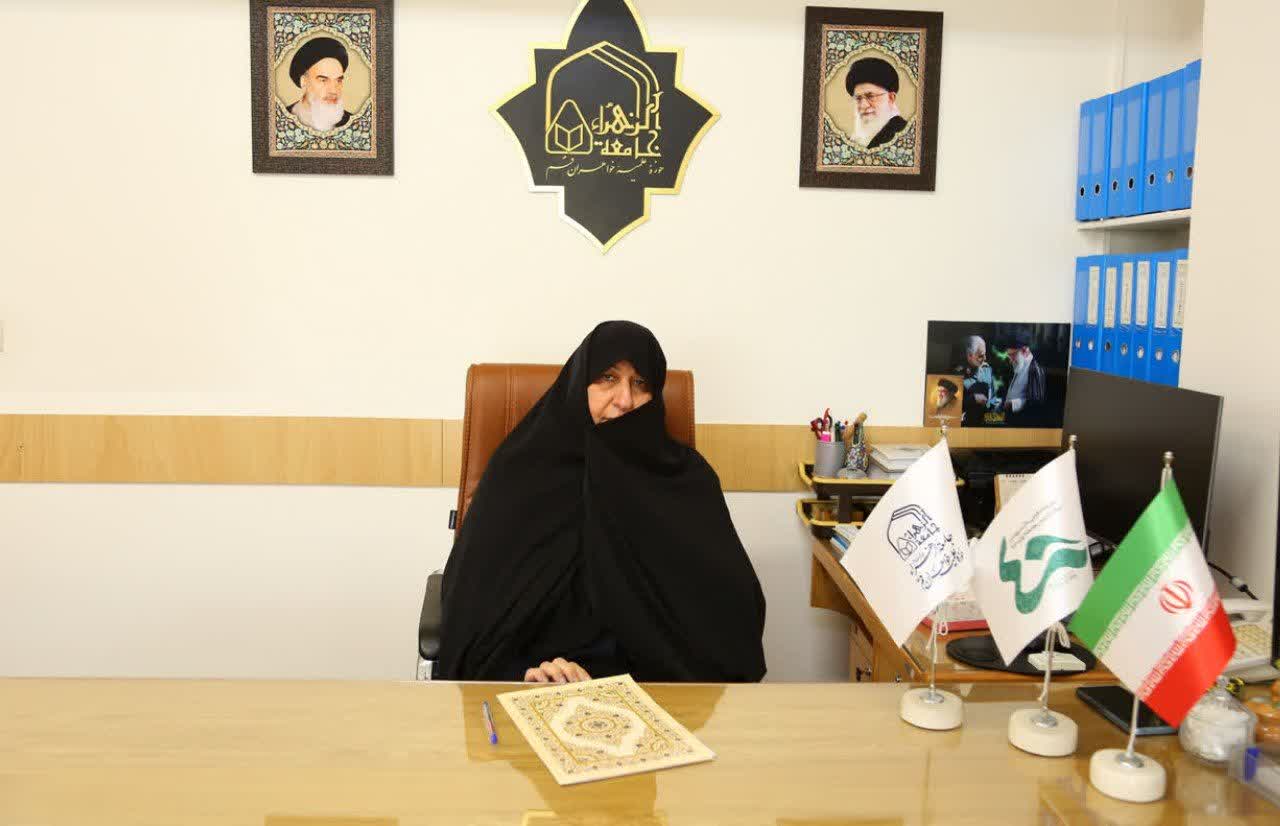
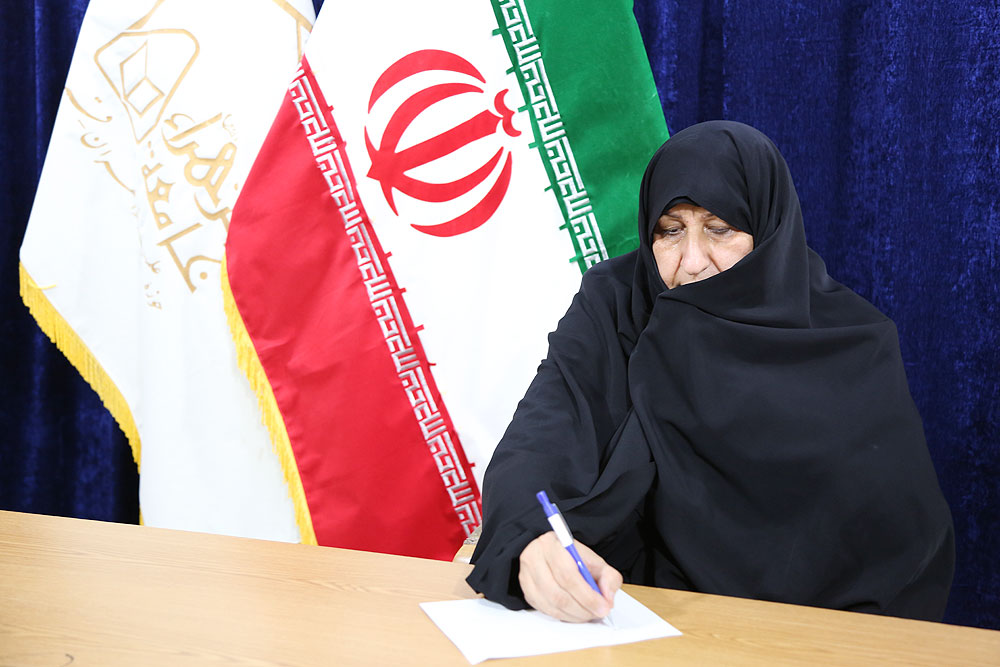
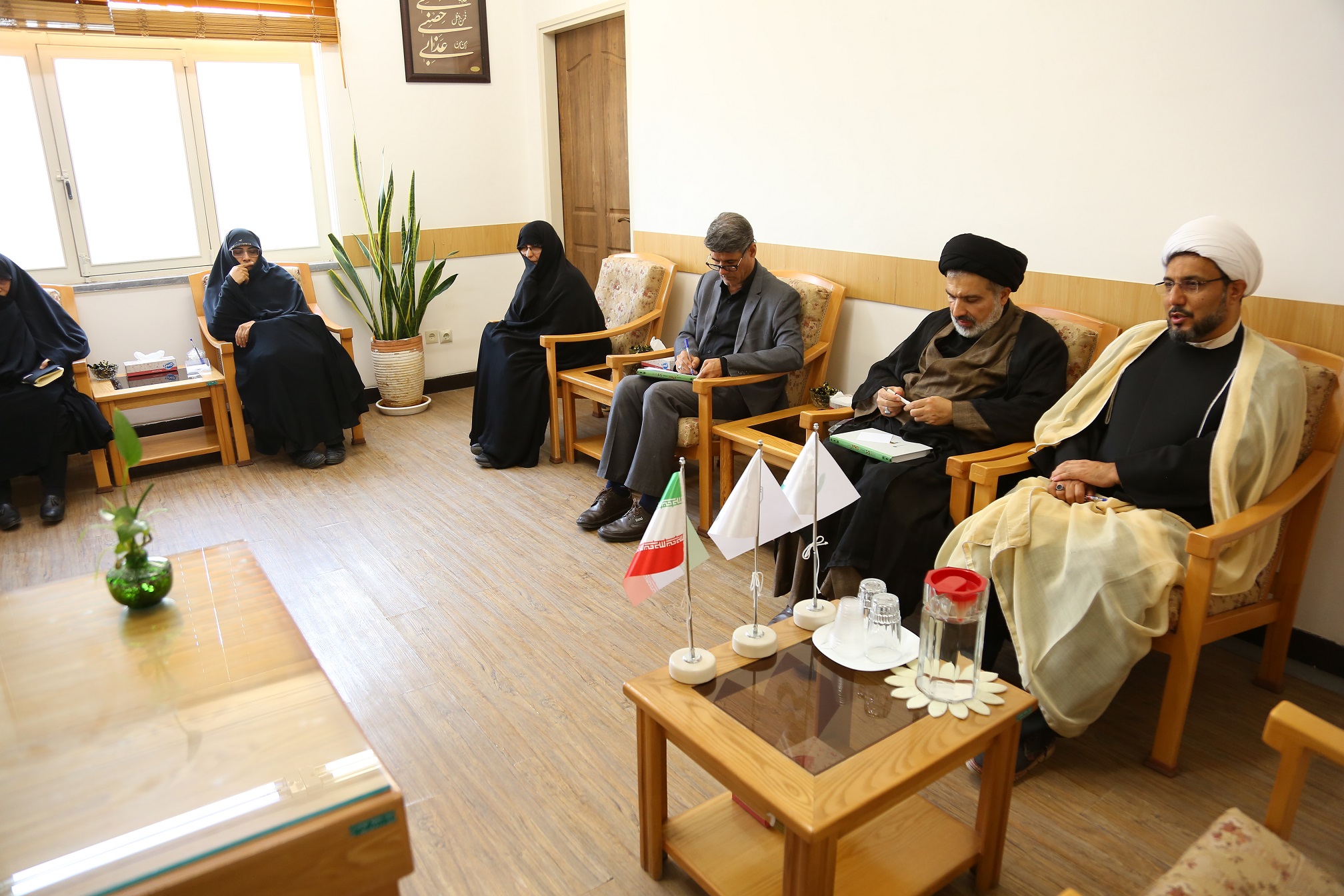
Exclusive interview with the Director of Jamiat al‑Zahra (sa); A new horizon for the Fifth “Women’s Book of the Year” Conference with an international approach Dr. Borqaei, Director of Jamiat al‑Zahra (sa)
The Director of Jamiat al‑Zahra (sa), referring to the call for submissions for the Fifth Women’s Book of the Year Conference with an international approach, said: “This scholarly event has entered a new stage; a phase that, with a focus on issues concerning women and family in the contemporary world, seeks to identify and introduce women’s academic works, expand scholarly dialogue among researchers, and establish a network of women researchers at the national and international levels.” According to the Public Relations Office, the fifth edition of the “Women’s Book of the Year Conference” is being held with an international approach and with the aim of identifying, introducing, and supporting women’s academic and research works. This edition, with a special focus on issues related to women and family in the contemporary world, seeks to provide a platform for scholarly dialogue among researchers, expand academic cooperation, and create a network of women researchers at the national and international levels. In this regard, an interview has been conducted with Dr. Sayyeda Zohreh Borqaei, Director of Jamiat al‑Zahra (sa) and Chair of the Policy Council of the Women’s Book of the Year Conference, regarding the objectives, scholarly approaches, and future prospects of the fifth edition of this conference, which follows below: Question: Considering the successful experience of the four previous editions, what new approach has the fifth edition of the Women’s Book of the Year adopted, and based on what necessities and requirements has the Secretariat defined entry into this new horizon? Jamiat al‑Zahra (sa), as the largest women’s seminary in the Shia world, has always paid special attention to knowledge production, research, and the scholarly role of women in various fields. In this regard, over the past four editions, the “National Women’s Book of the Year Conference” has been held with objectives such as identifying, introducing, and supporting valuable academic and research works, as well as networking and synergy among women. However, the necessity for transformation and the new approach of this edition arises from a perspective that goes beyond borders and is in continuation of the school of the martyred Supreme Leader, Ayatollah al‑Uzma Khamenei (qaddasa sirrahu), and his recommendations and emphases on the active and proactive presence of women in global arenas. On this basis, the “international approach” has been placed at the core of the activities of the Fifth Women’s Book of the Year Conference. This necessity stems from our belief that the academic capacity of Muslim women is not confined to geographical borders, and that today a suitable opportunity has emerged to expand the scope of this event to researchers and academic centers outside the country, and to secure their active participation through scholarly dialogue, exchange of experience, and the establishment of connections among women researchers in different countries. Question: One of the prominent axes of this edition of the conference is its focus on “issues of women and family in the contemporary world.” How has the scholarly design of the conference been structured to respond to these challenges? The issue of women and family today faces fundamental questions and challenges in many societies—questions that are not merely local phenomena, but rather the result of global transformations, contemporary intellectual currents, and structural changes in the institution of the family. Responding to these questions requires deep, scholarly, up‑to‑date research that is methodologically sound and academically acceptable. The prevailing approaches at the global level, on their own, are unable to provide comprehensive answers to these crises; hence, the need for presenting scholarly alternatives based on divine models is felt more than ever. Accordingly, the scholarly design of this edition has been structured in such a way as to simultaneously cover three components: 1. Scholarly validity: Submitted works must possess methodological rigor, theoretical innovation, and research originality. 2. Contemporary problem‑orientation: Works must provide theoretical and practical responses to current issues and challenges concerning women and family, and not merely re‑read past heritage. 3. Cross‑cultural capacity: Works must be usable in scholarly dialogues among different cultures and societies and be presentable in international academic forums. Our overarching goal in this design is to introduce the Islamic model in the field of women and family issues as an “exportable and reliable model”—a model which, as stated by the martyred Leader Ayatollah al‑Uzma Khamenei (qaddasa sirrahu), possesses the capacity to resolve family crises beyond geographical and cultural borders. We believe that this model must enter scholarly dialogue within the theoretical structures and global policy‑making frameworks related to the family, and gradually become one of the serious alternatives to secular theories in the field of family studies. Question: What outcomes will the presence of researchers and academic centers at the national and international levels have for the women’s scholarly network? This question precisely points to one of the strategic functions of this event. The participation of researchers, experts, and academic centers at the national and international levels has at least four influential layers of impact: 1. Scholarly dialogue: A platform for deepening scholarly dialogue among researchers in the field of women and family—transforming the conference into a continuous process for exchanging findings and methodologies. 2. Capacity‑building: An opportunity for women researchers from Islamic countries and Muslim women residing in various countries to present their scholarly capacities, research experiences, and intellectual abilities in a reputable and wide‑reaching arena. 3. Scholarly networking: The potential to form a broad scholarly network of women researchers in the field of women and family—creating lasting human and institutional ties and supporting women’s knowledge production. 4. Regional and global cooperation: A starting point for broader scholarly relations and cooperation—joint research projects, co‑publications, academic exchanges, and the formation of specialized hubs in different countries. We do not define this event as a temporary program, but rather as the initial platform for institutionalizing scholarly activity and sustainable networking among women researchers in the Islamic world; for we believe that the existing social and scholarly capital in the network of Jamiat al‑Zahra (sa) alumnae at the national and international levels is a unique capacity for realizing this far‑reaching goal. Question: From a supportive and motivational perspective, what plans does the Secretariat of the Women’s Book of the Year Conference have for introducing the selected works and authors? One of the central objectives of this event is to create motivation and provide support for women active in scholarly and research fields. Many valuable works produced by women may have remained less known for various reasons, and the inherent mission of such an event is to identify and introduce these hidden capacities. In this edition, in addition to honoring the selected works, serious efforts will be made to introduce the authors in scholarly contexts and to establish connections between them and academic and research centers. Question: As a final question, is the “Women’s Book of the Year” limited merely to holding a conference and a closing ceremony, or is there a plan for the continuity of this scholarly process? The organizers’ approach is not limited to holding an annual ceremony; rather, the main objective is that the “Women’s Book of the Year” should become a continuous scholarly process for identifying, supporting, and introducing outstanding works by women. In this edition, efforts will be made to identify valuable works in the field of women and family, to introduce the scholarly capacities of women researchers, and to strengthen connections between researchers and various academic centers. The scholarly process—from the call for submissions and receipt of works to evaluation and peer review—will be pursued with utmost precision and in accordance with appropriate academic standards, so that the selected works truly represent the scholarly capabilities of women. Finally, all professors, researchers, authors, academic and cultural centers, and especially women researchers inside and outside the country are sincerely invited to participate actively in the fifth edition of the Women’s Book of the Year. It is hoped that this event will strengthen research motivation, expand scholarly dialogue among cultures, and present effective perspectives in the field of women and family, becoming one of the reputable scholarly currents at the regional and global levels.