
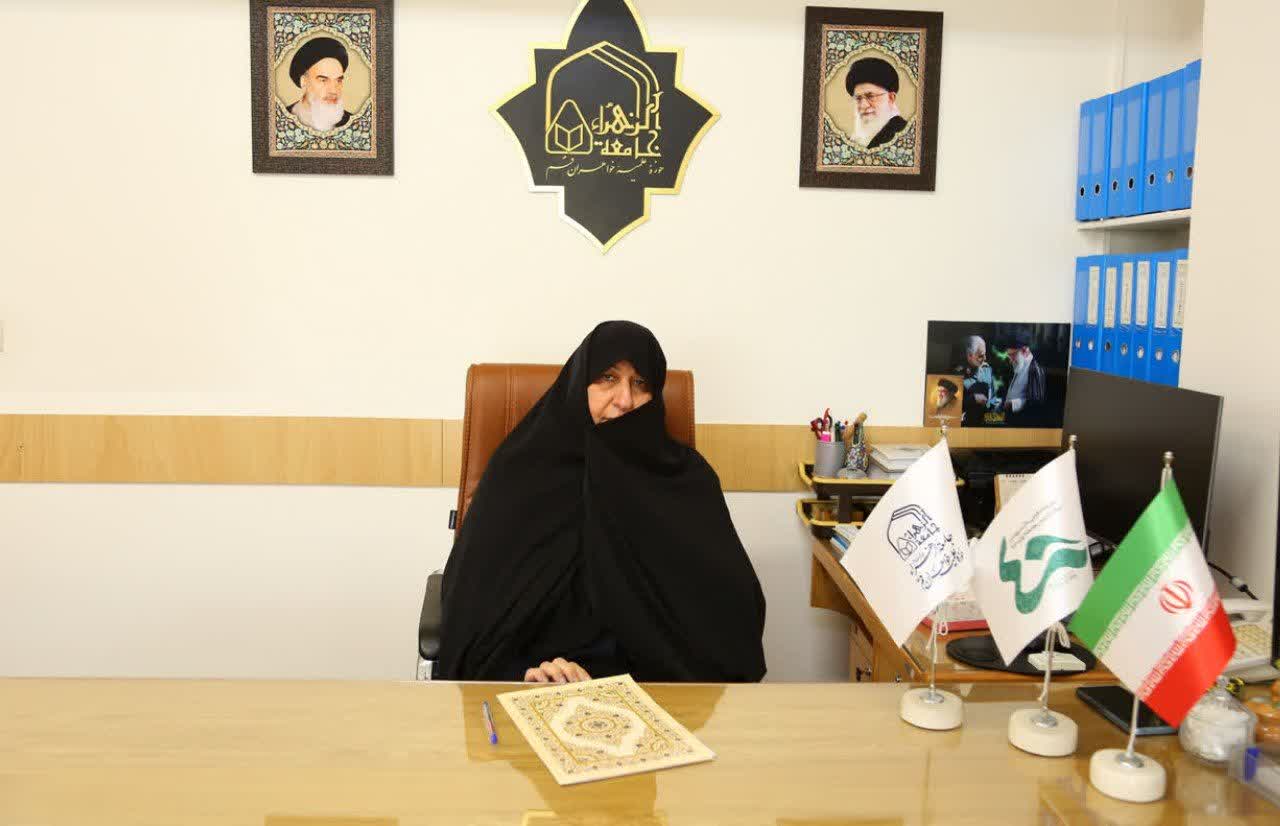
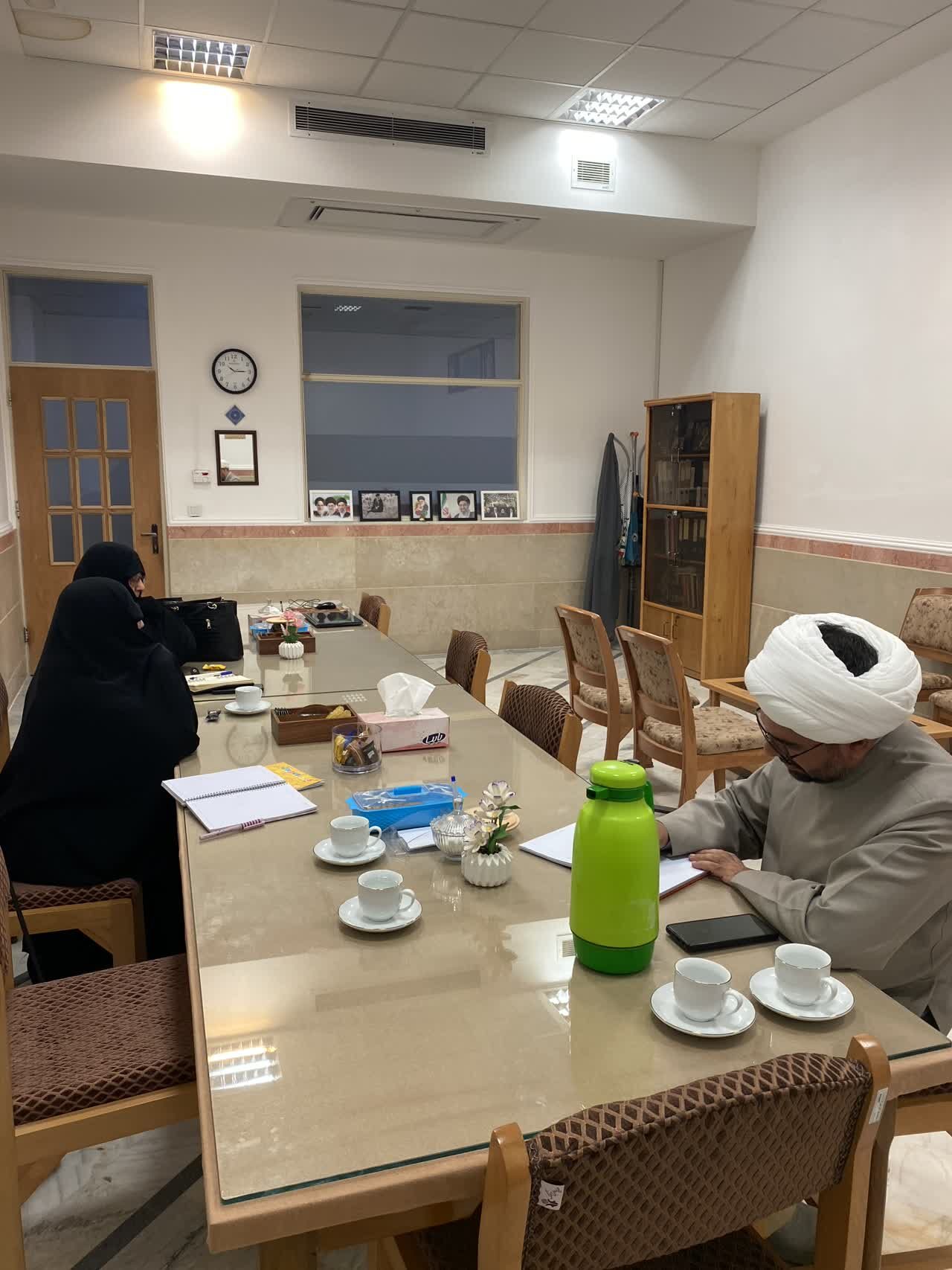
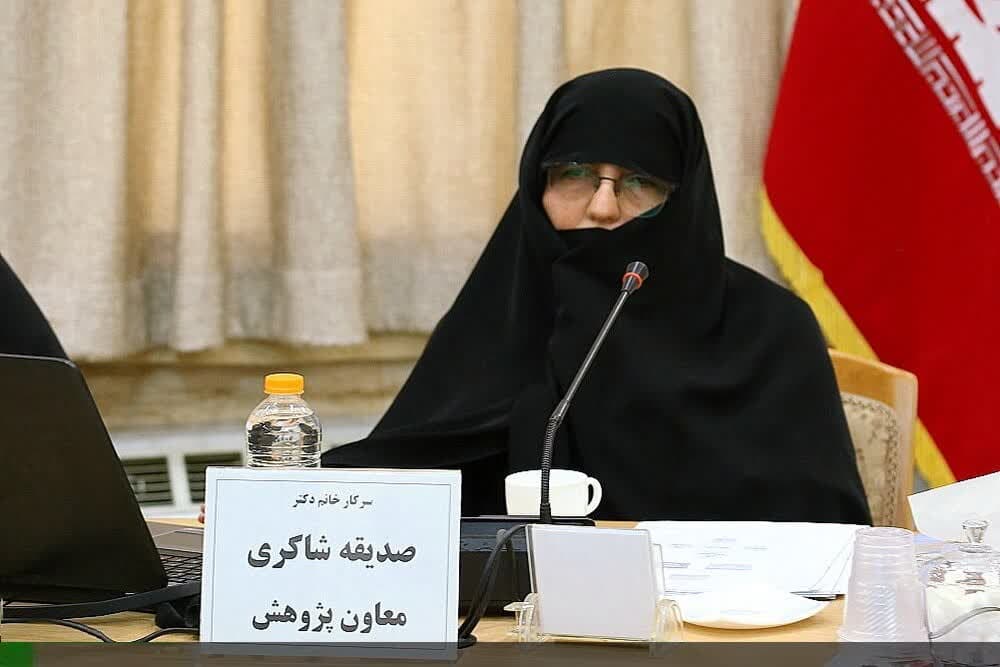
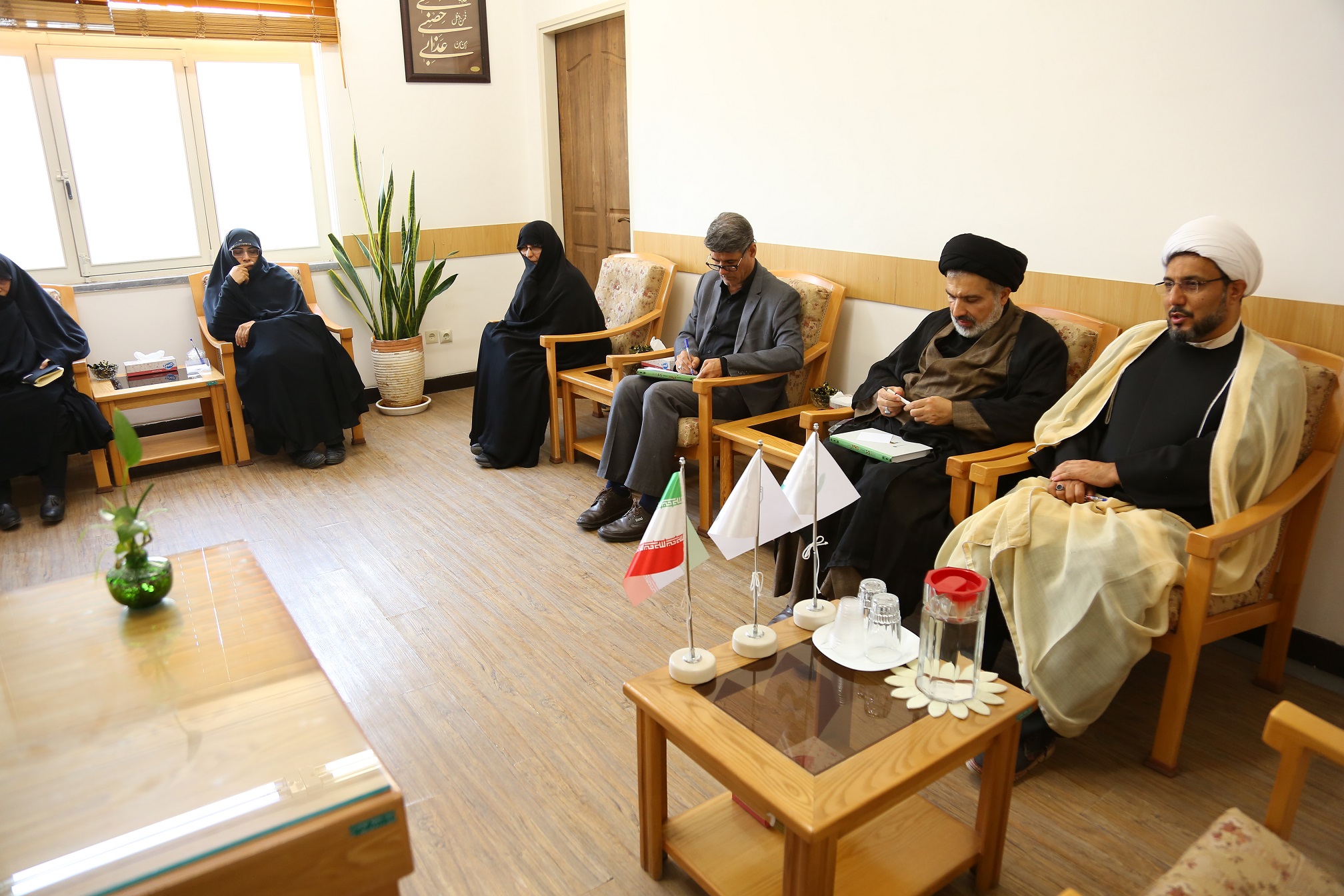
In a meeting between the Head of the Representative Office of the Islamic Culture and Relations Organization in Qom and the Director of Jamiat al‑Zahra (S), potential avenues for collaboration—centered on the Fifth Women’s Book of the Year Conference—were reviewed. The session was attended by Ms. Seyyedeh Zohreh Borqei, Director of Jamiat al‑Zahra (S); Hujjat al‑Islam wal‑Muslimin Yahya Jahangiri Sohravardi, Head of the Representative Office of the Islamic Culture and Relations Organization in Qom; and Ms. Seddiqeh Shakeri, Deputy for Research at Jamiat al‑Zahra (S). The participants discussed strategies for expanding scientific, cultural, and international cooperation in support of the upcoming conference. Also present were Ms. Somayeh Haji Esmaeili, Scientific Secretary of the Fifth International Women’s Book of the Year Conference; Ms. Masoumeh Farahani, Director‑General of Research Cooperation and Support; Hujjat al‑Islam wal‑Muslimin Taghizadeh; and Mr. Masoumian, officials from the Islamic Culture and Relations Organization in Qom. — Women’s Book of the Year: A Reflection of the Islamic Revolution’s Transformation in Women’s Scholarly Participation Ms. Borqei extended condolences on the days of Muharram and emphasized the importance of maintaining structured cooperation with scientific and cultural institutions, particularly the Islamic Culture and Relations Organization. She introduced the research and international departments of Jamiat al‑Zahra (S), noting that the institution—hosting students from more than seventy countries—holds significant potential for international collaboration. She highlighted that the international division of Jamiat al‑Zahra (S), especially following the Supreme Leader’s directives during the institution’s fortieth anniversary, has become the central axis of its activities and is prepared to expand scientific and cultural partnerships. Referring to the Supreme Leader’s remarks on 30 Aban 1403, she stated that female seminarians must be present in academic forums and contribute to the global dissemination of the Revolution’s intellectual message. She added that international trips to Pakistan, Thailand, and Indonesia demonstrated the active engagement of female seminarians in diverse fields. Borqei stressed that cooperative programs must be designed in a way that they remain stable beyond managerial changes and continue within documented structural frameworks. She explained that the Women’s Book of the Year Conference—previously held nationally—has shown significant growth in both quantity and quality of submissions, prompting the proposal to hold the fifth edition internationally. She emphasized that the Supreme Leader’s civilizational perspective on women is clearly reflected in the achievements of Jamiat al‑Zahra (S), and that the Women’s Book of the Year is a manifestation of the transformation brought about by the Islamic Revolution in women’s scholarly participation. — The Necessity of Women’s Active Participation in International Academic Forums Hujjat al‑Islam wal‑Muslimin Yahya Jahangiri Sohravardi highlighted the extensive capacities of Jamiat al‑Zahra (S) and emphasized the need to expand scientific and cultural cooperation. Referring to the Supreme Leader’s guidance on increasing the scholarly presence of female seminarians, he stated that the institution must utilize the expertise of its faculty and graduates internationally and facilitate their engagement with global academic centers. He underscored the importance of strengthening international relations through initiatives such as dispatching faculty members abroad, leveraging international alumni, and encouraging female seminarians’ participation in interfaith dialogues. These efforts, he noted, can significantly enhance women’s presence in global academic forums. Jahangiri also emphasized the importance of organizing events such as the Women’s Book of the Year and the Global Martyr Sadr
Award with an international orientation, expressing the organization’s readiness to support their implementation. — The Fifth Women’s Book of the Year Conference to Be Held Internationally with a Focus on Women and Family Ms. Seddiqeh Shakeri, Deputy for Research at Jamiat al‑Zahra (S), expressed appreciation for the support of administrators and distinguished scholars in advancing national conferences and expanding research activities among female seminarians. She reported significant quantitative and qualitative improvement in student participation during the fourth edition of the conference. She noted that the fourth conference—featuring a special section on women and family—witnessed a remarkable increase in participation from seminary students, with female seminarians’ contributions surpassing those of university participants. Shakeri highlighted the importance of enhancing the scholarly standards of such programs and introduced the “Women Authors’ Intellectual Forum”, an innovative initiative aimed at identifying key issues and proposing specialized solutions in the field of women and family. She stated that, contingent upon the establishment of necessary infrastructures, this initiative will be implemented alongside international programs in future editions. She also announced plans to expand international activities, explaining that—given the presence of students from seventy countries and the possibility of collaboration with Al‑Mustafa International University—the Fifth Women’s Book of the Year Conference will be held with an international orientation, particularly focusing on women and family. Hujjat al‑Islam wal‑Muslimin Taghizadeh emphasized the need for precise, phased planning to expand the international activities of the Qom seminary. Drawing on past experiences in interfaith dialogue and research initiatives, he highlighted the importance of identifying aligned institutions abroad and establishing joint cooperation before expanding activities to additional centers. He underscored the necessity of defining shared objectives in interfaith dialogues and identifying areas of collaboration to effectively engage like‑minded partners.